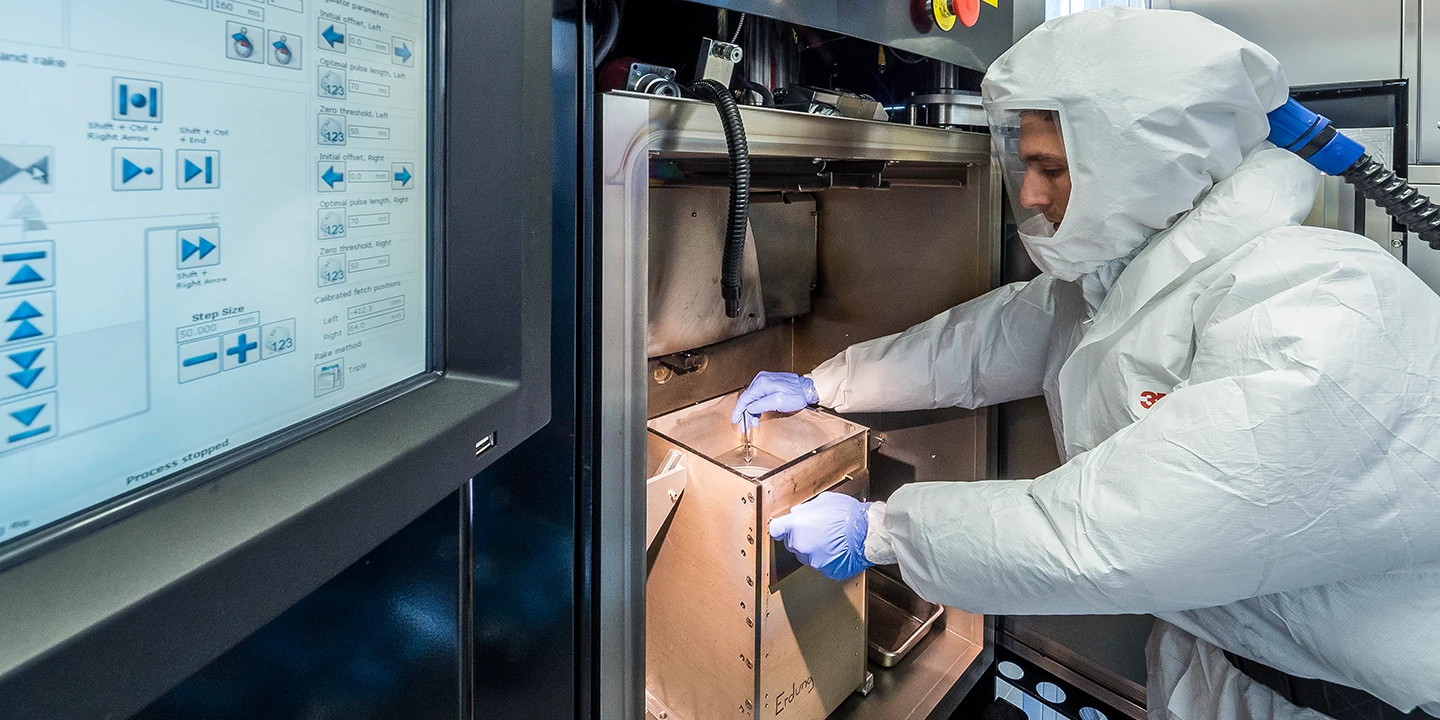
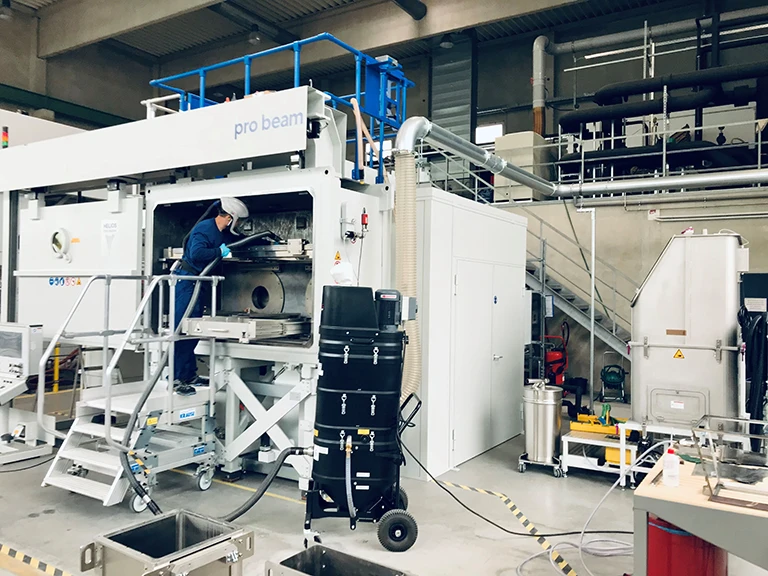
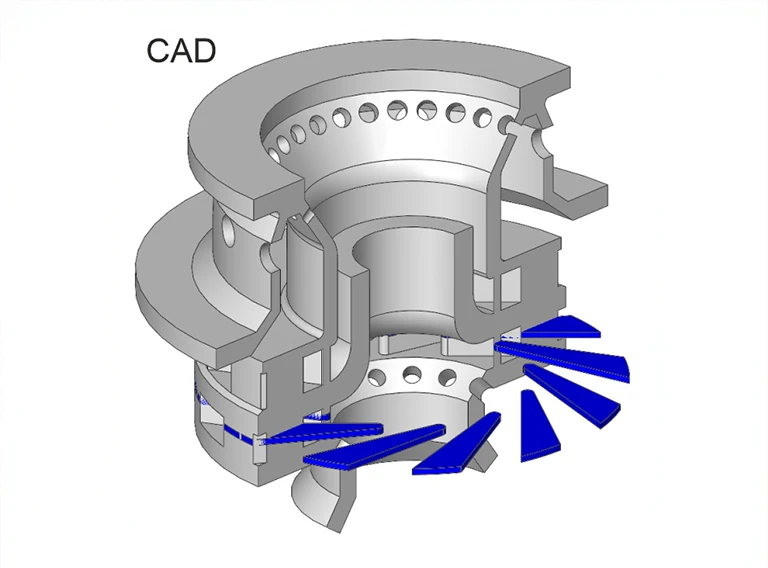
Electron beam powder bed fusion (PBF-EB) is an additive manufacturing process in which metal powder is melted layer by layer using an electron beam. The components are manufactured directly from CAD data, which enables tool-free and fast production.
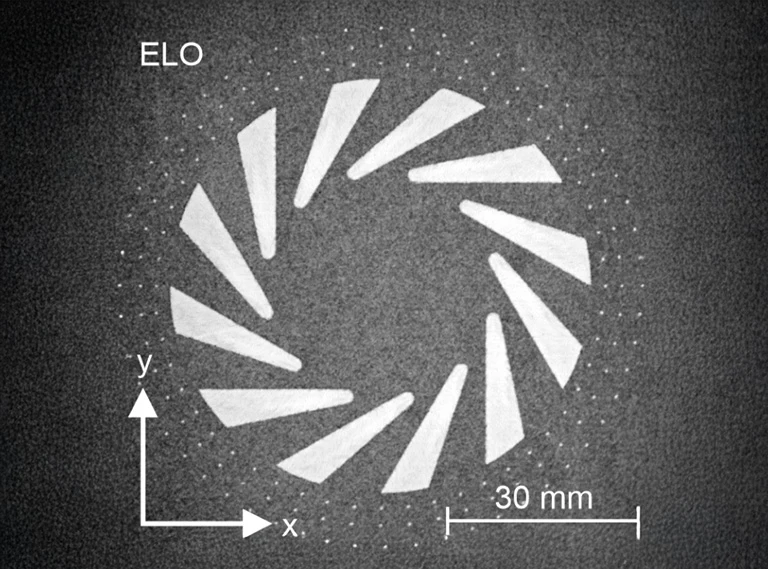
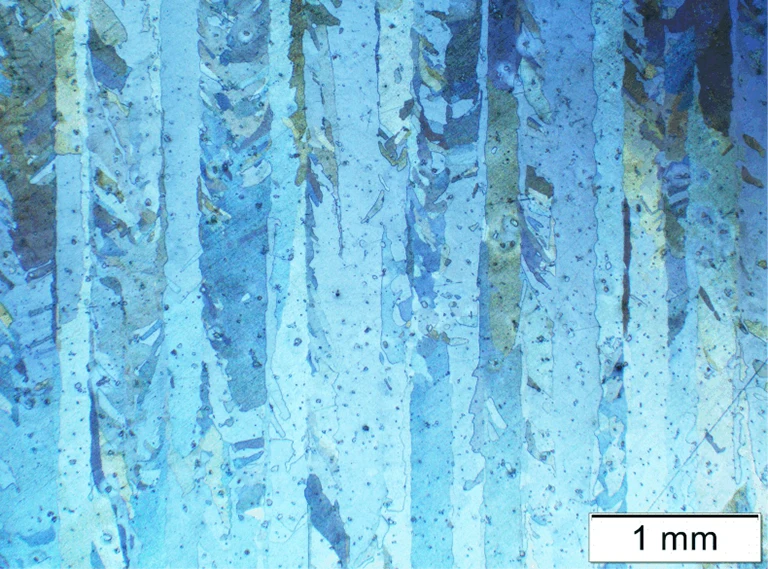
The advantages comprise improved design freedom, reduced lead times, constant component costs, efficient use of raw materials as well as fast solidification and a fine-grained microstructure. Latest PBF-EB machines enable high-resolution in-situ process observation via backscattered electrons, which can surpass the performance of conventional X-ray inspections.
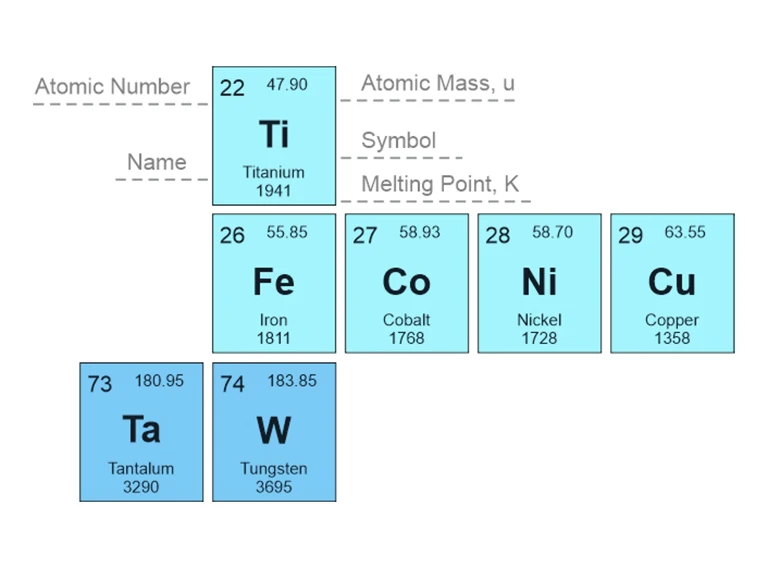
Performance materials such as titanium aluminides, high-strength nickel-based alloys, refractory metals as well as reflective copper alloys and pure copper are processed.
The combination of high process temperatures and vacuum conditions reduces defect density, gas uptake and contamination ensuring high-quality components.
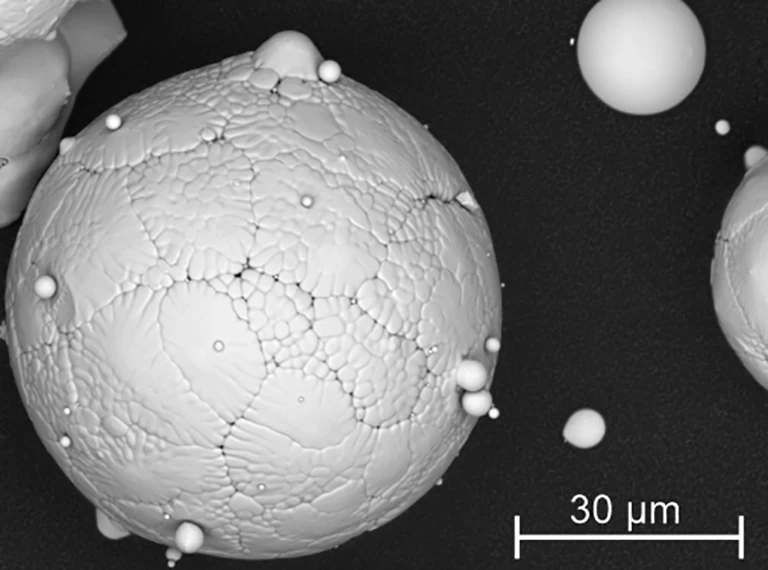
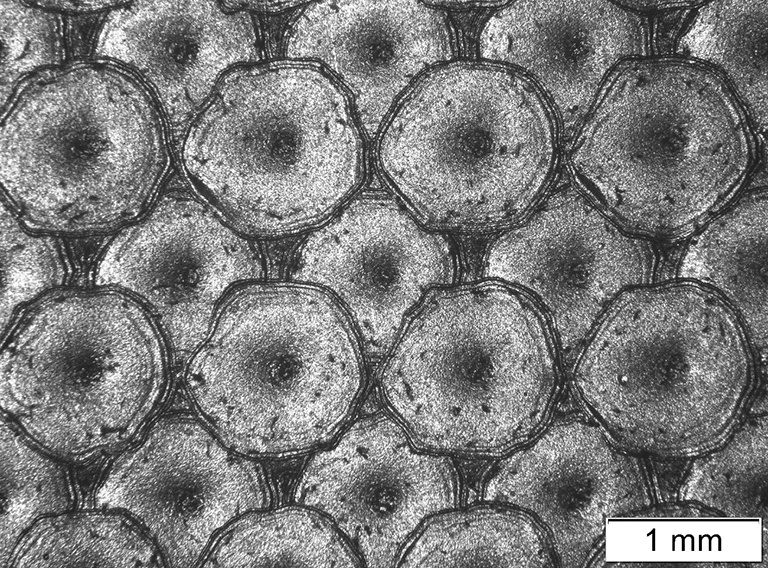
Materials characterization includes chemical analyses (e.g., spark spectrometer, GDOES, XRF, EDX, N/O/C/S analyzer, microprobe) to determine alloy composition, impurities, and elemental distribution, physical analysis (laser flash apparatus, dilatometers, buoyancy weighing) to determine thermal conductivity, thermal expansion as well as density, and optical analysis using light and scanning electron microscopy as well as laser-based particle size analysis.
Mechanical properties are measured under static, cyclic and dynamic conditions at different stress conditions and temperatures; Changes in shape are monitored by optical measuring systems, hardness and creep properties are determined via hardness testing devices and creep systems. The modulus of elasticity is precisely determined by RFDA (Resonant Frequency Damping Analysis).
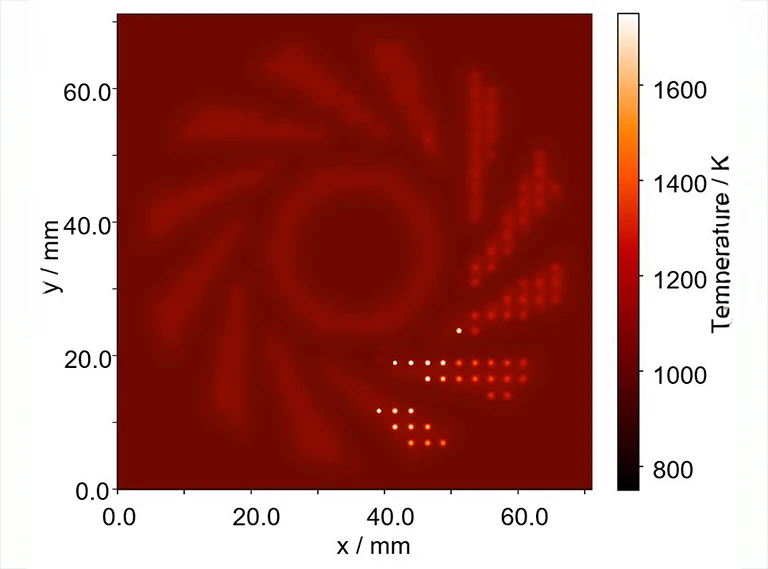
Computational methods are used to design and optimize additive manufacturing processes. The preliminary process design is based thermal calculations on a macro-scale (e.g. temperature distribution within the build envelope). Process optimization is achieved by design of experiments (DoE), regression and correlation analyses as well as multi-criteria analyses.