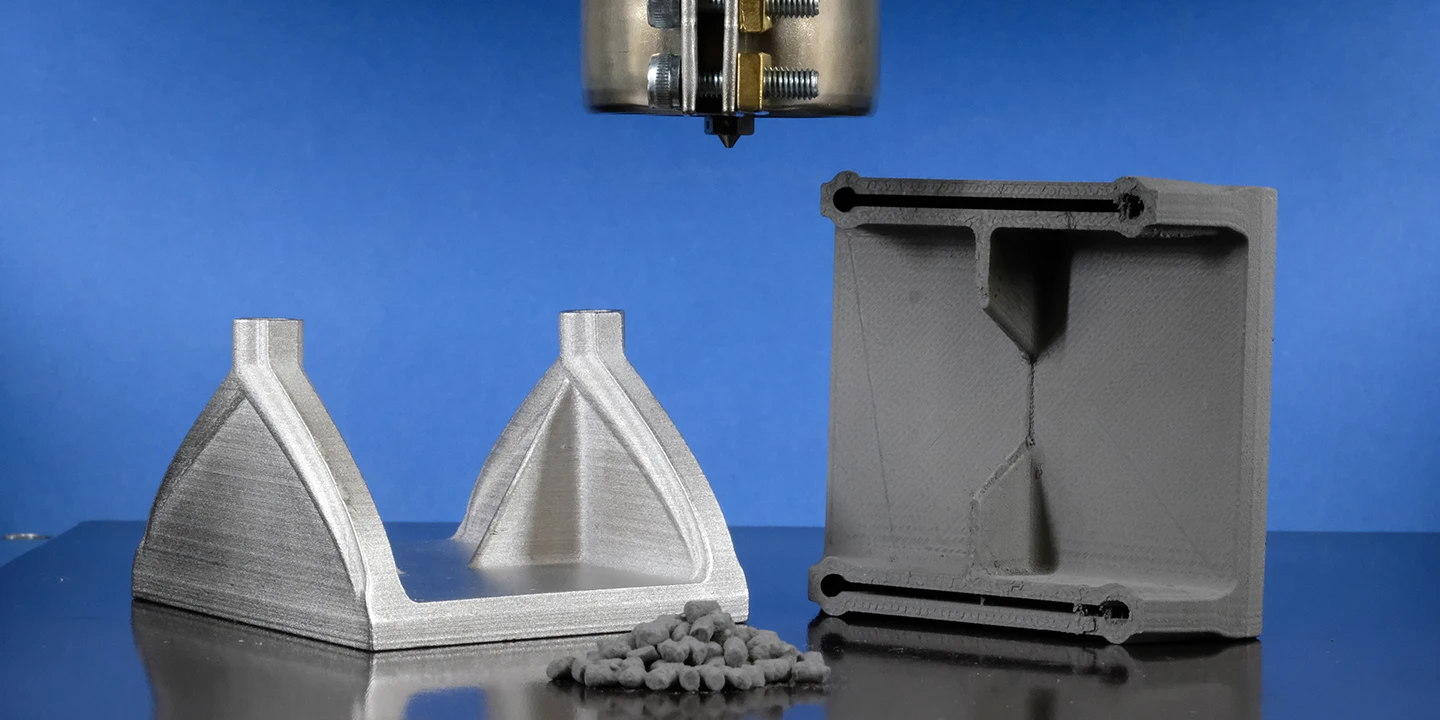
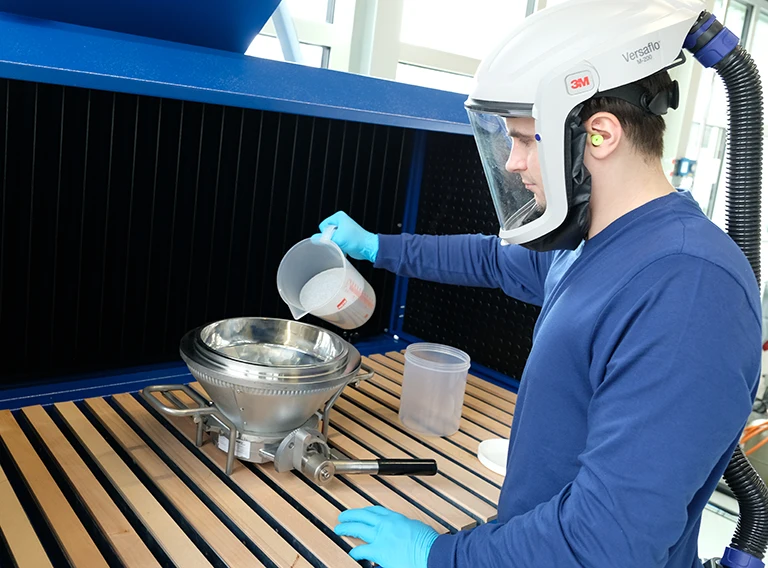
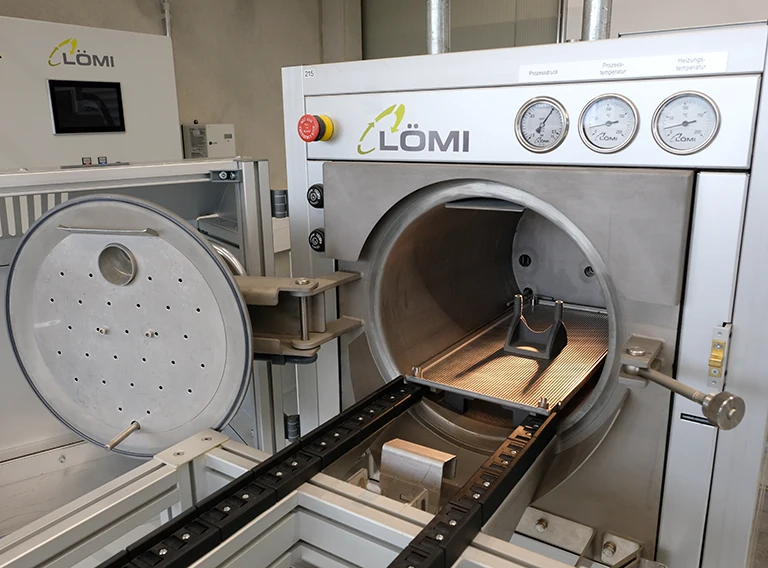
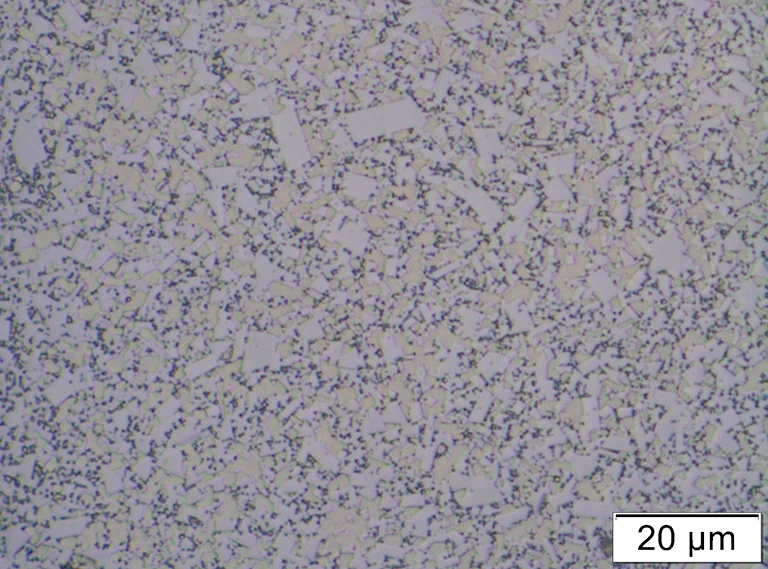
The quality-assured additive manufacturing chain comprises a digitally networked production system for manufacturing metal and ceramic components based on highly filled thermoplastic granules. The entire process chain consisting of granule production, 3D shaping, debinding, sintering, and any necessary post-processing, is handled in-house.
The advantage over filament-based printing is significantly lower costs due to the use of conventional injection molding granules. To increase efficiency, metal powder injection molding can be used for shaping at higher production volumes (n=100+).
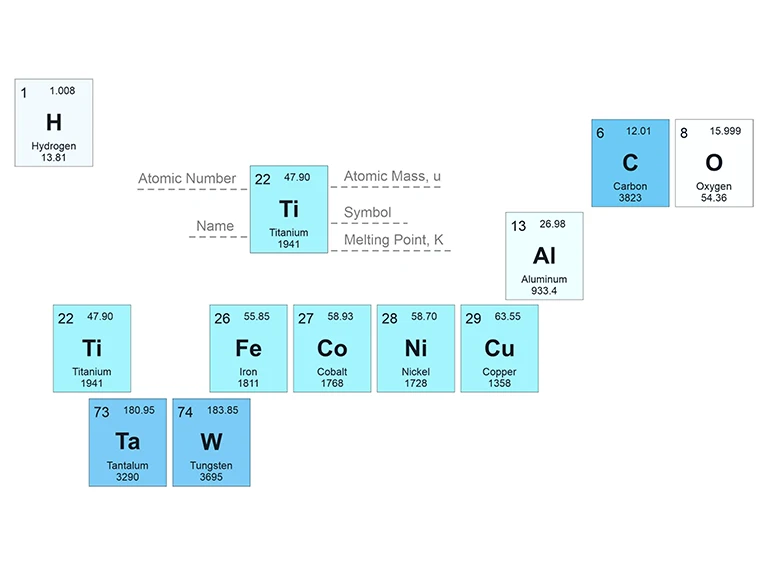
Components are manufactured from abrasive metal materials such as hard metal or tool steel to reduce post-processing steps and save material. In addition, pure copper is processed for the production of customised electronic components with a homogeneous microstructure, and bio-based or water-soluble binders are developed to reduce the CO₂ footprint of the manufacturing processes.
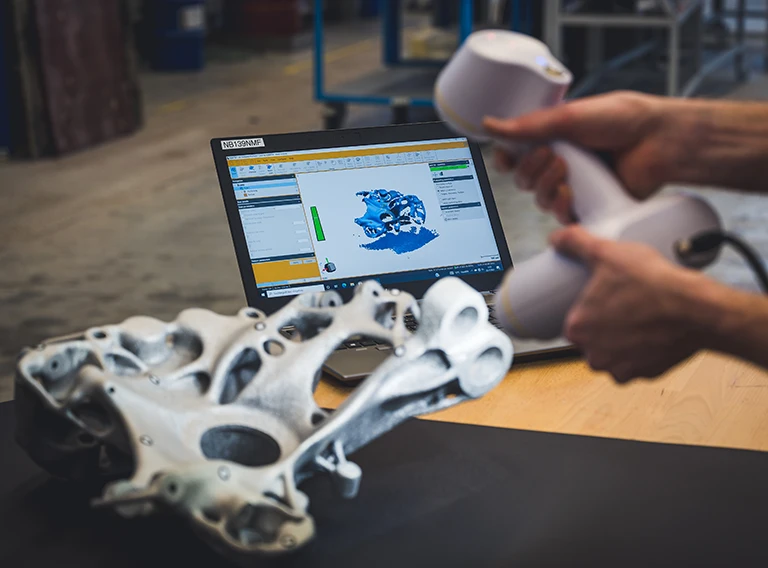
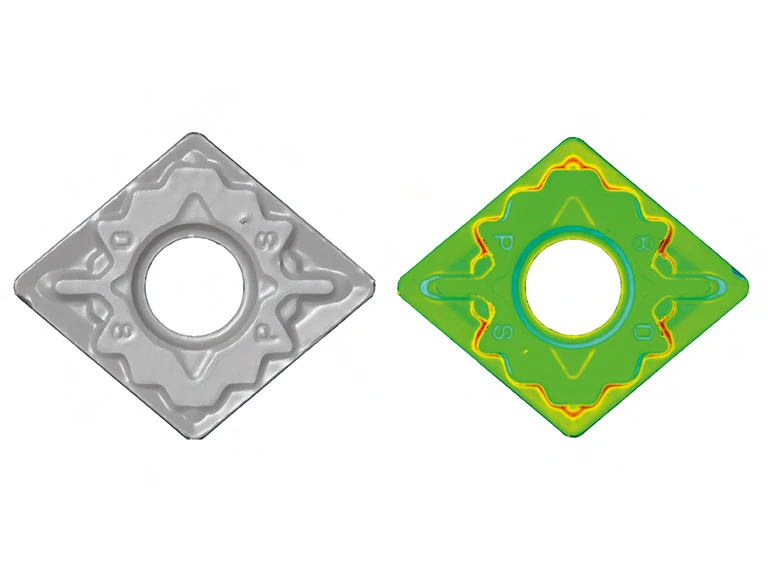
Digital quality assurance links all process steps of the manufacturing chain – from powder delivery to component post-processing – capturing the actual geometry using 3D measurement systems and comparing it to the target CAD geometry. This ensures high component quality with minimal rejection, allows for statistical process analysis, verification of interactions, and component optimisation.
The additive manufacturing chain enables the efficient testing of computationally intensive processes such as predictive AI models, thereby driving innovation across various industries and application areas.