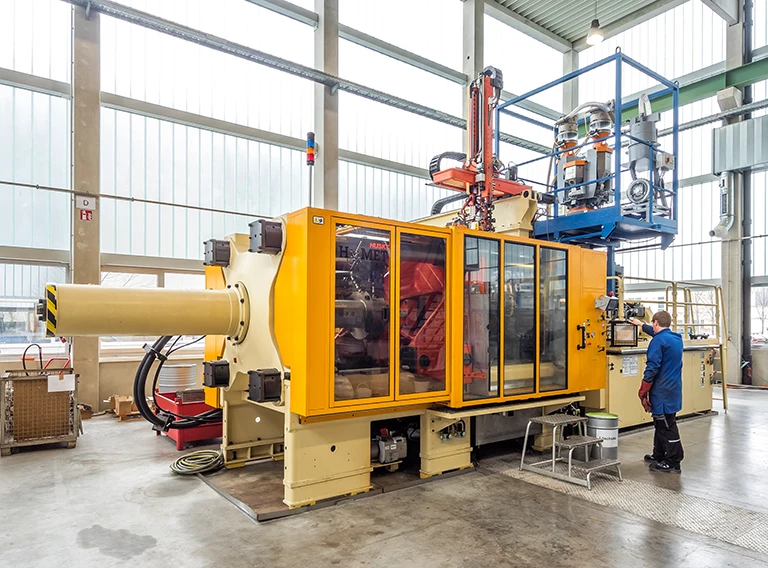
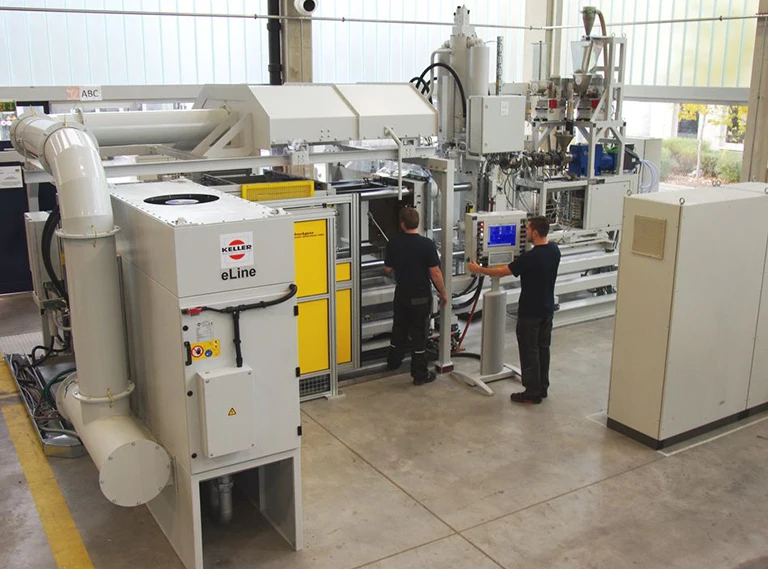
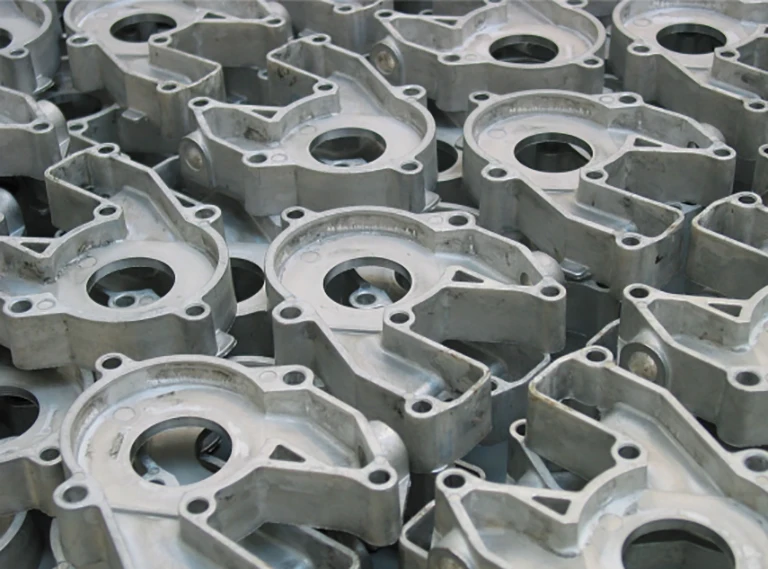
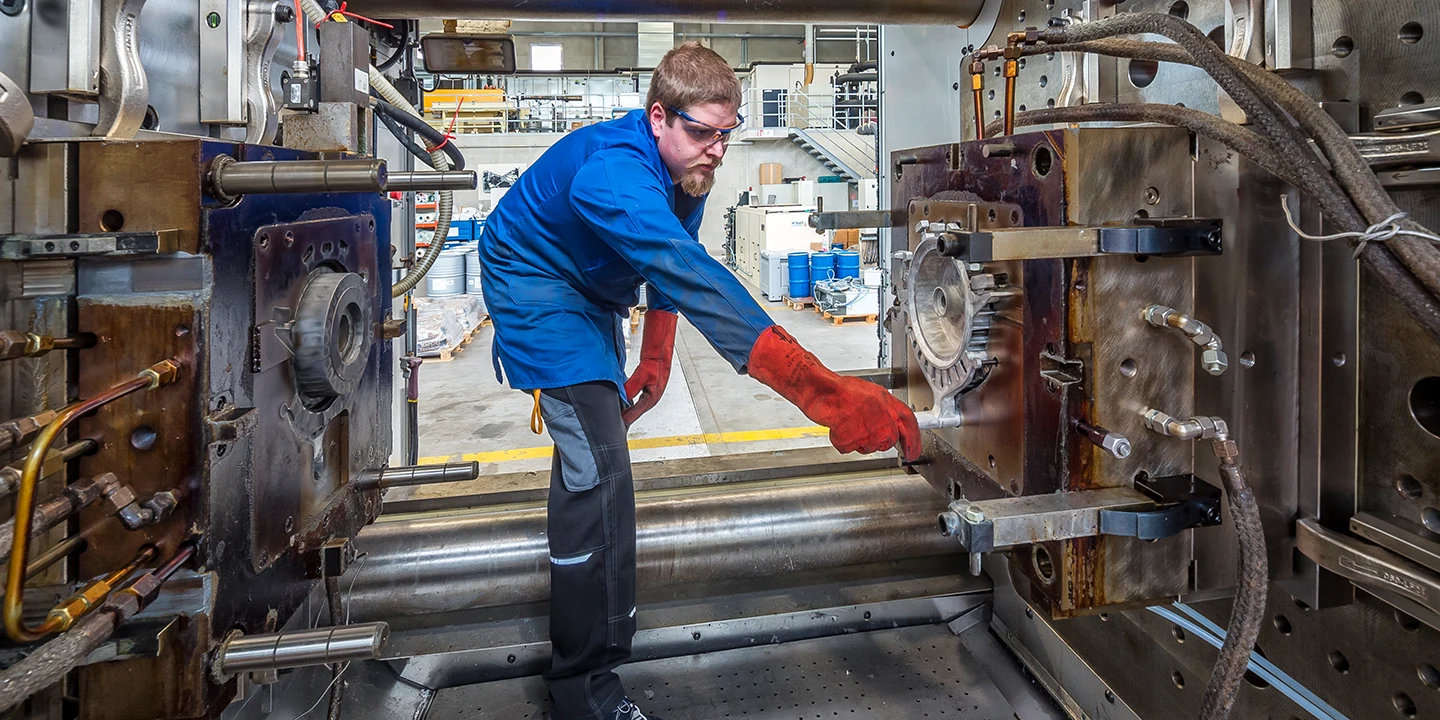
One focus is on magnesium injection molding (Thixomolding®), cold-chamber die casting, and other innovative casting processes. In Thixomolding®, magnesium granules are heated to a semi-solid or fully molten state under continuous shearing and then injected into the mold under high pressure. No cover gas is required. The process results in e.g. short cycle times, long tool life, reduced energy consumption, low porosities, narrow tolerances, and a wide range of alloys—ideal for complex, thin-walled components.
Cold-chamber die casting is particularly suitable for larger serial parts made of aluminum or magnesium and enables a high degree of automation and robust production.
For all processes, we consider the entire process chain, from the production of the raw material to tool design, process optimization, and heat treatment to surface finishing.
We process standard die-casting alloys (Al: 226, 239; Mg: AZ91, AM50, AM60) as well as special alloys (Mg: AS31, AM40, AJ62x, MRI153, MgCarbonit91). In addition, new alloys are developed by blending granules using the Thixomolding® process.
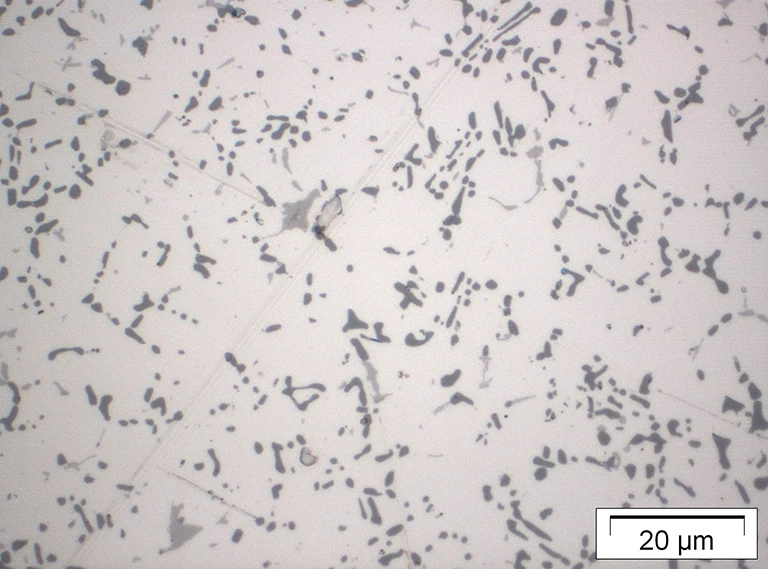
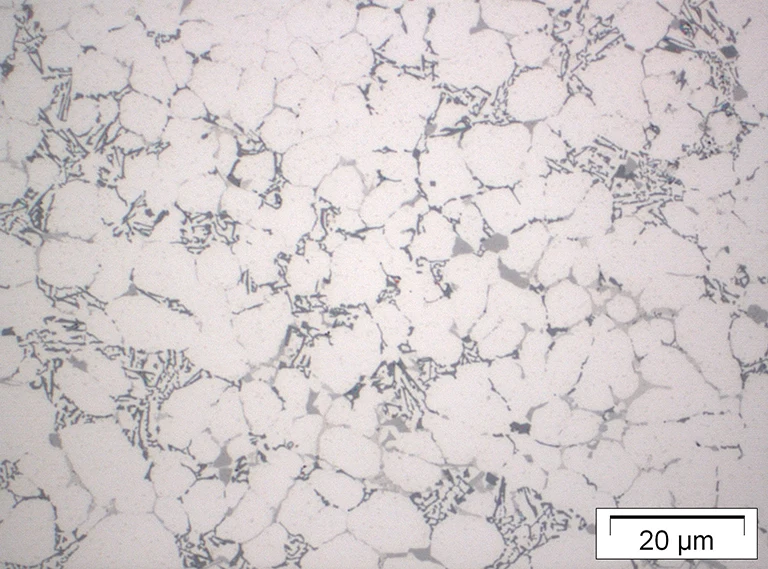
Material characterization includes chemical analysis (spark spectrometer, GDOES, XRF, EDX, N/O/C/S analyzer, microprobe) to determine alloy composition, impurities, and element distribution, as well as physical analysis (laser flash apparatus, dilatometer, buoyancy weighing) to determine thermal conductivity, thermal expansion, and density, as well as optical analysis using light and scanning electron microscopy, including EDX and 3D measurement via strip light projection.
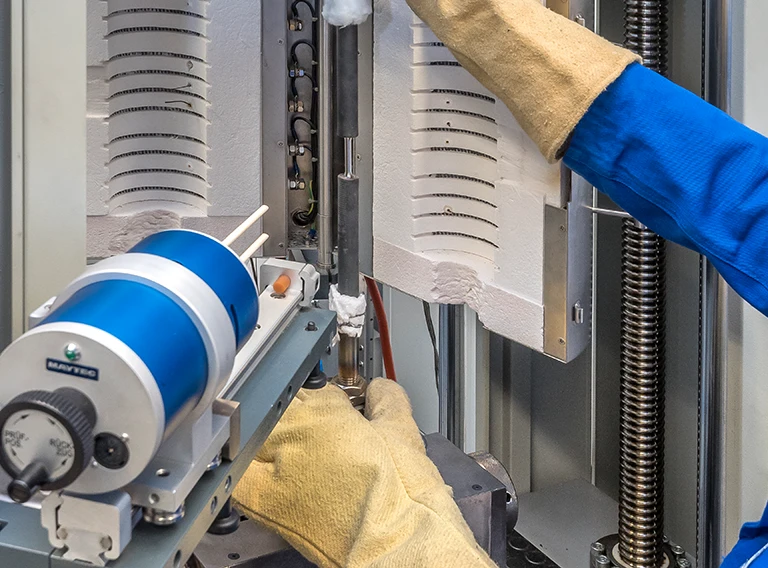
In addition, mechanical properties can be determined, e.g., static and dynamic strength, hardness, and creep properties using universal testing machines, pulser, hardness testers, and creep testing systems (up to 350 °C for light metals, up to 1000 °C for high-temperature materials), as well as the precise determination of Young’s modulus and damping using RFDA. Durability in the environment (corrosion) can be evaluated using salt spray and immersion tests, as well as a laboratory test for liquid metal corrosion.
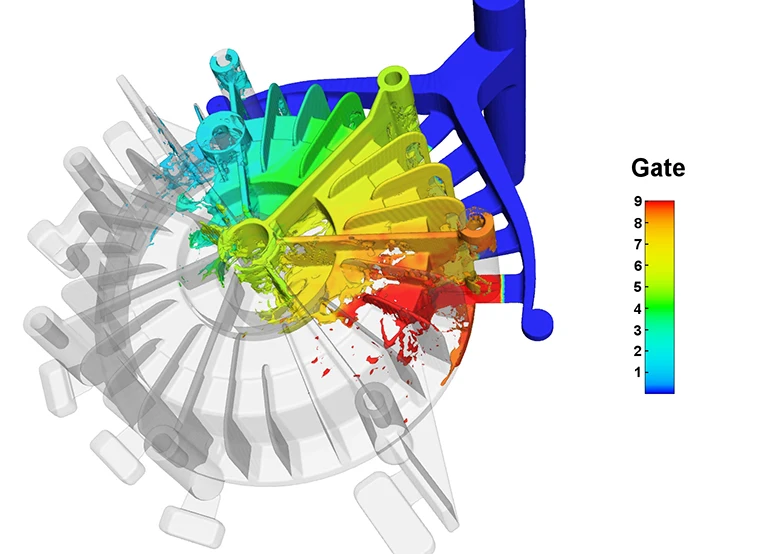
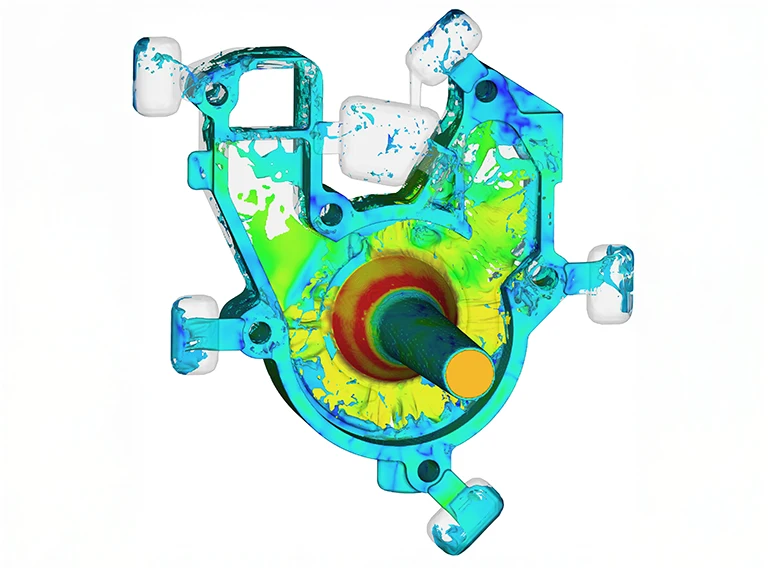
We are using commercial CFD software and in-house developments for mold design and process simulation of the casting processes. This involves optimization of gating systems and vacuum ports, as well as overflows and the duct system for temperature control fluids, to improve mold filling and solidification.
Advanced modelling techniques enable the evaluation of thermal and mechanical stresses on molds and casting machine components.