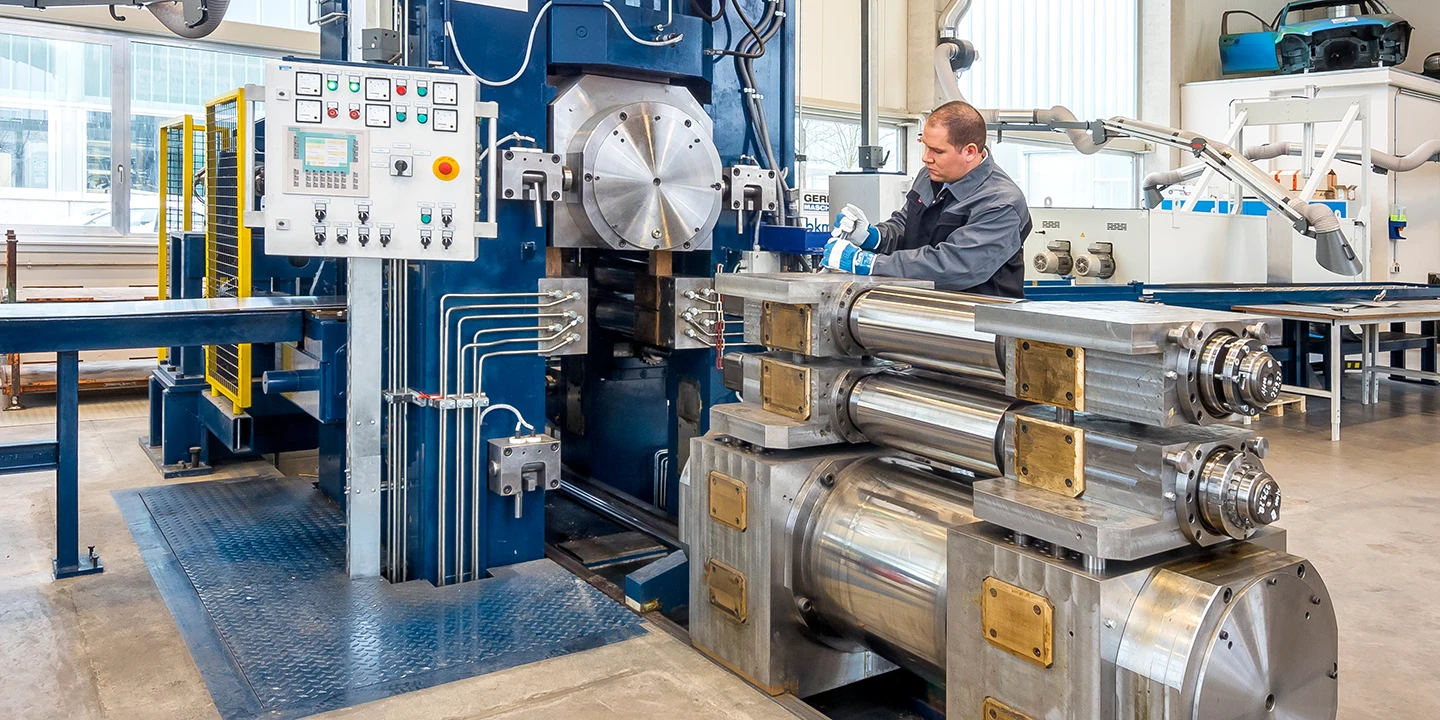
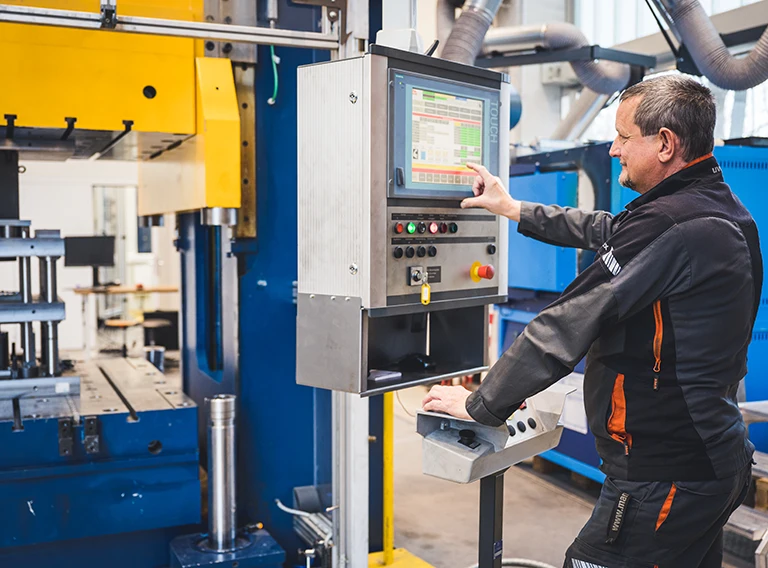
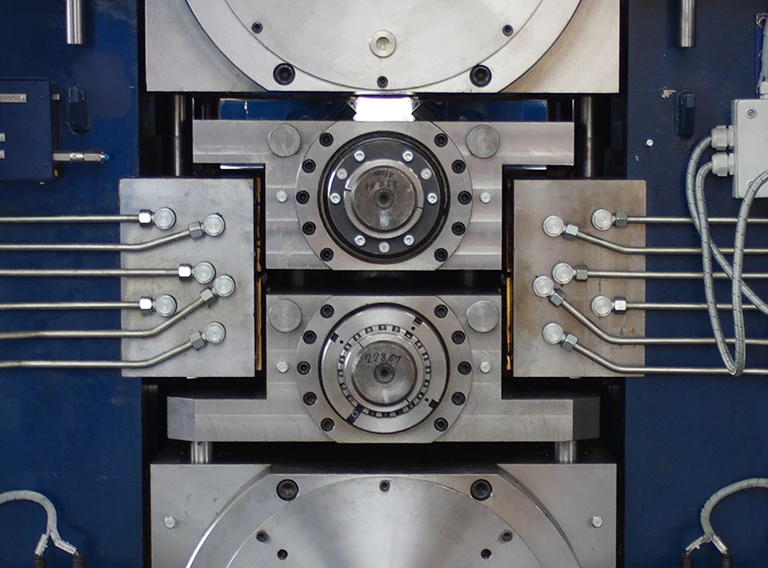
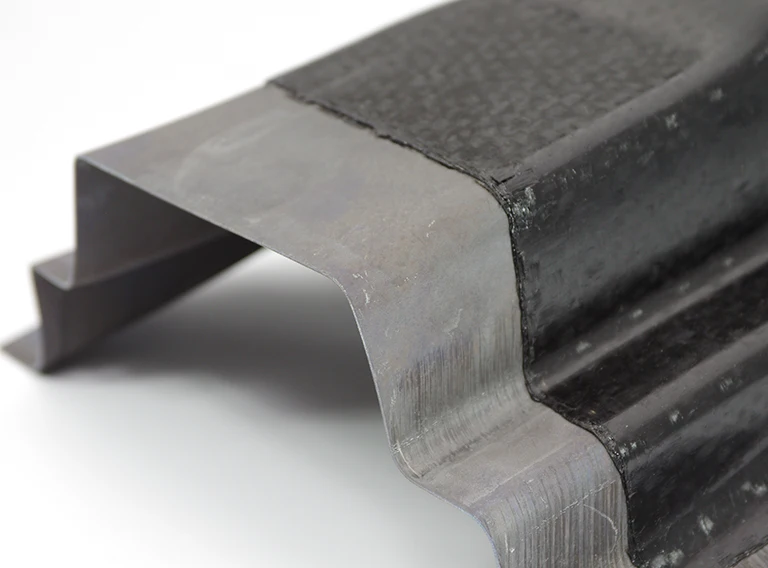
The manufacturing processes of metal forming encompass the development and production of lightweight and hybrid components using sheet metal, bulk, and bulk-sheet-metal forming processes. The focus is on a continuous process chain – from tailored semi-finished products with adapted thickness distributions or multi-layer materials (accumulative roll bonding) to components with validated properties.
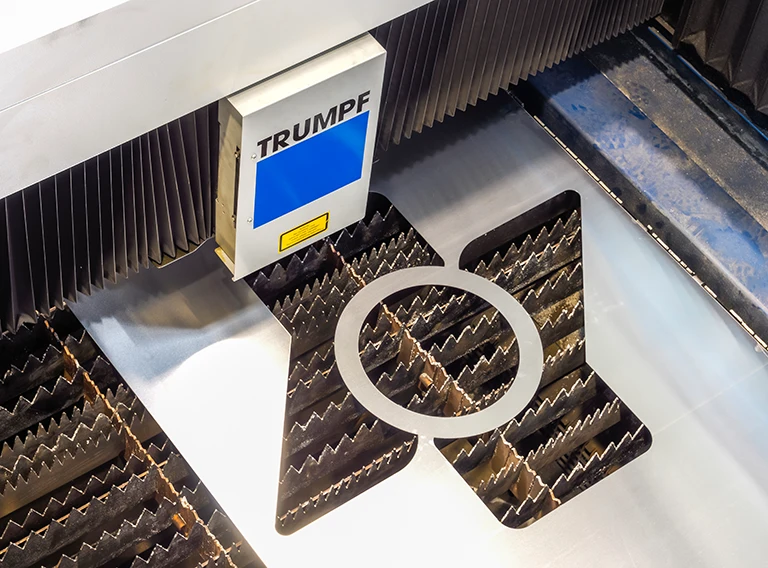
In addition, prototypes and small series are manufactured according to customer specifications using laser cutting and press forming.
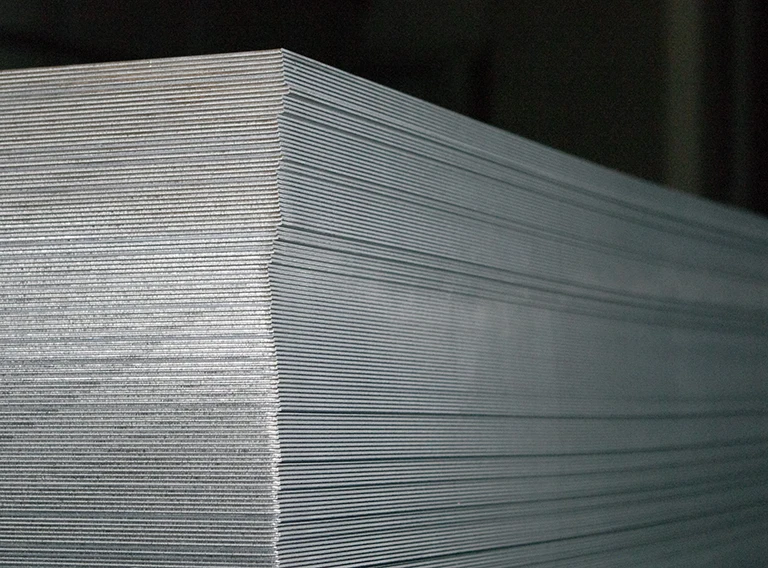
We process aluminum alloys, high-strength steels, titanium, magnesium and hybrid materials. Various semi-finished product forms are used, such as sheets, tubes, profiles, foils and wires.
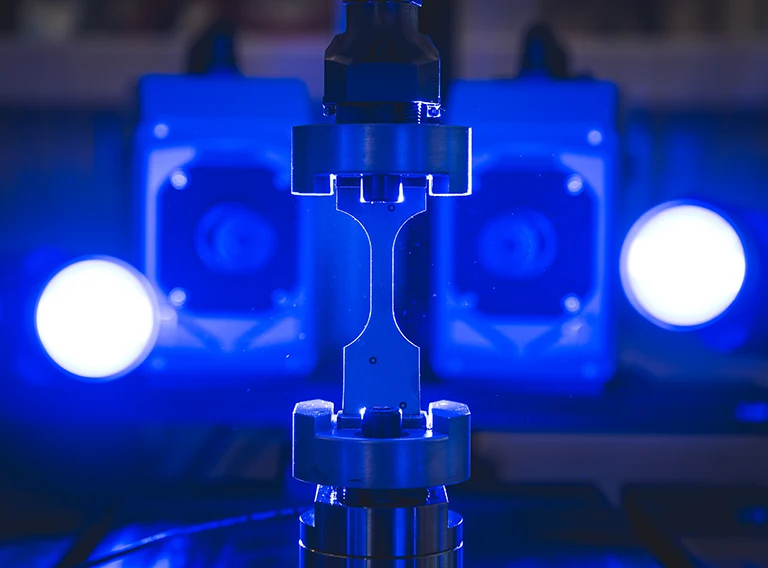
Material characterization forms the basis for precise forming and crash simulations. Mechanical properties are determined under various stress states and temperatures, with optical measuring systems capturing the deformations.
Complementary component analysis and damage investigations are performed using 3D measurement via fringe projection and comparison with CAD data and simulation results. In cooperation with the Friedrich-Alexander Universität Erlangen-Nürnberg, new testing methods, evaluation techniques, and material models are also being developed.
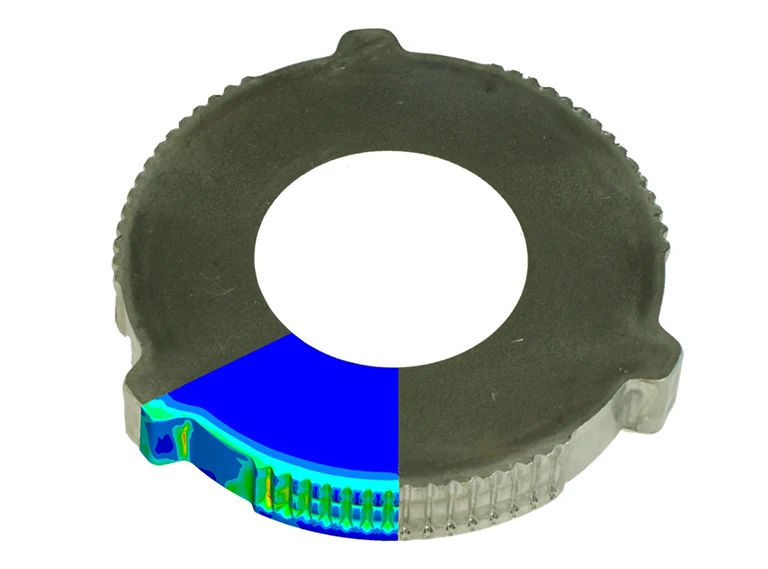
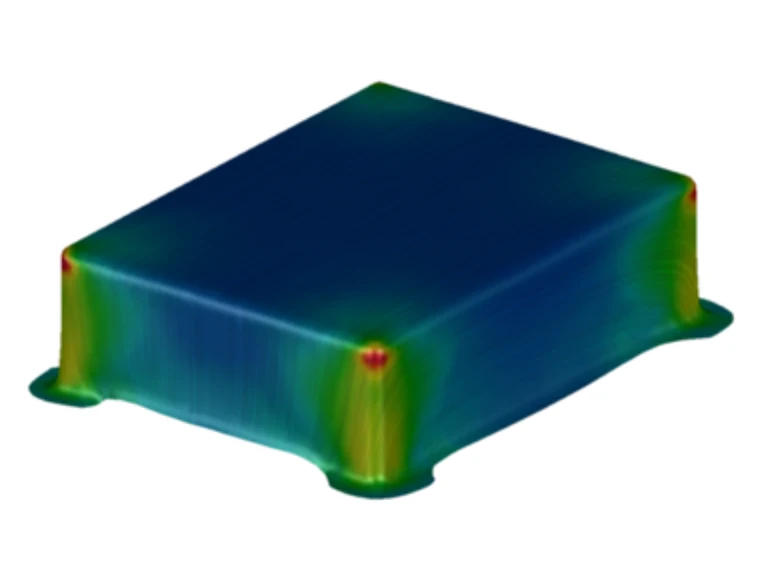
Computer-aided methods for the numerical design of forming processes, products and tools significantly shorten development cycles. Numerical models are created and refined—based, among other things, on real-world experiments—with the aim of ensuring the manufacturability of components and increasing the service life of forming tools.