Granule-based 3D printing

In the field of granule-based 3D printing, NMF manufactures metal and ceramic components via a fully quality-assured, digitally networked production chain – from feedstock manufacturing through 3D printing to debinding, and sintering as well as post-processing. Our customers benefit from cost-efficient production, high precision processing, minimal waste, and the ability to quickly and reliably realise innovative components for demanding applications.
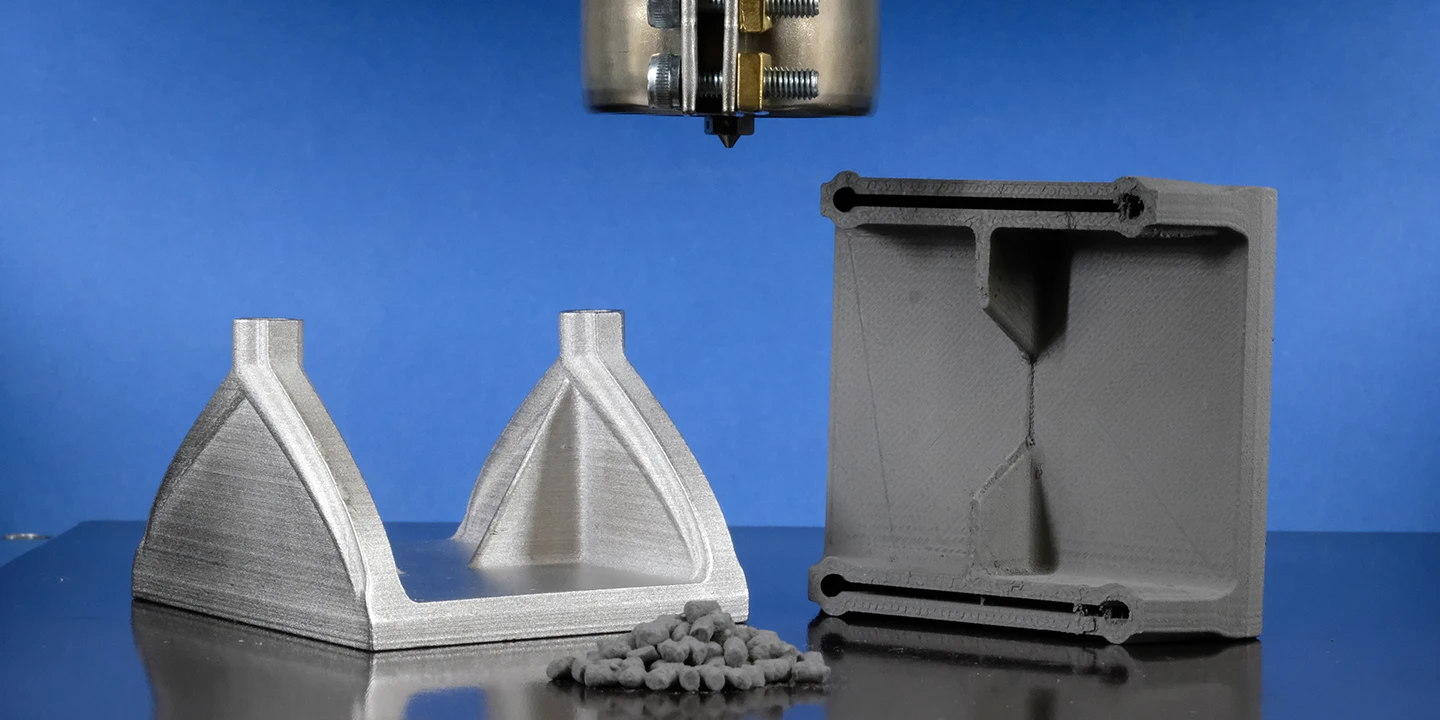
Eine 3D-Druckerdüse schwebt über einer Metallplattform mit zwei grauen 3D-gedruckten Teilen und einem kleinen Haufen Pellets vor einem blauen Hintergrund.

Manufacturing Processes

The quality-assured additive manufacturing chain comprises a digitally networked production system for manufacturing metal and ceramic components based on highly filled thermoplastic granules. The entire process chain consisting of granule production, 3D shaping, debinding, sintering, and any necessary post-processing, is handled in-house.

The advantage over filament-based printing is significantly lower costs due to the use of conventional injection molding granules. To increase efficiency, metal powder injection molding can be used for shaping at higher production volumes (n=100+).

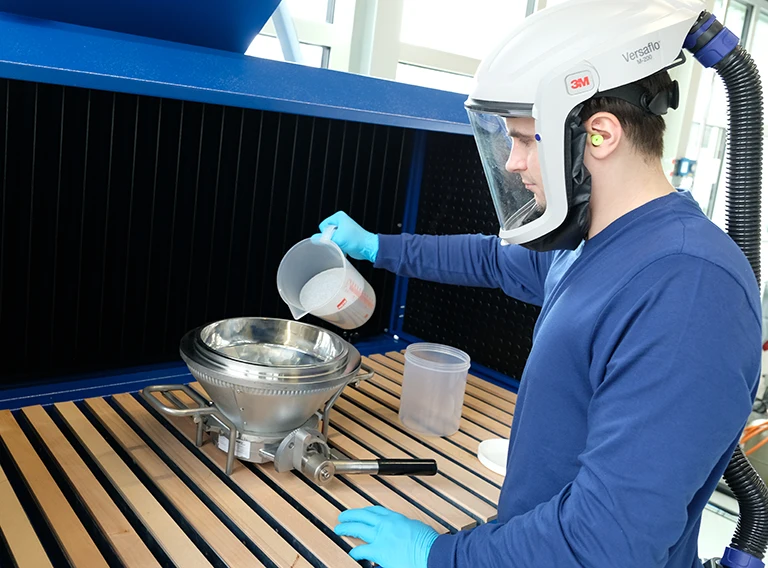
Eine Person, die Schutzhandschuhe und einen belüfteten Helm trägt, schüttet Pulver aus einem Kunststoffbehälter in einen Metalltrichter in einem Labor oder einem industriellen Arbeitsbereich.
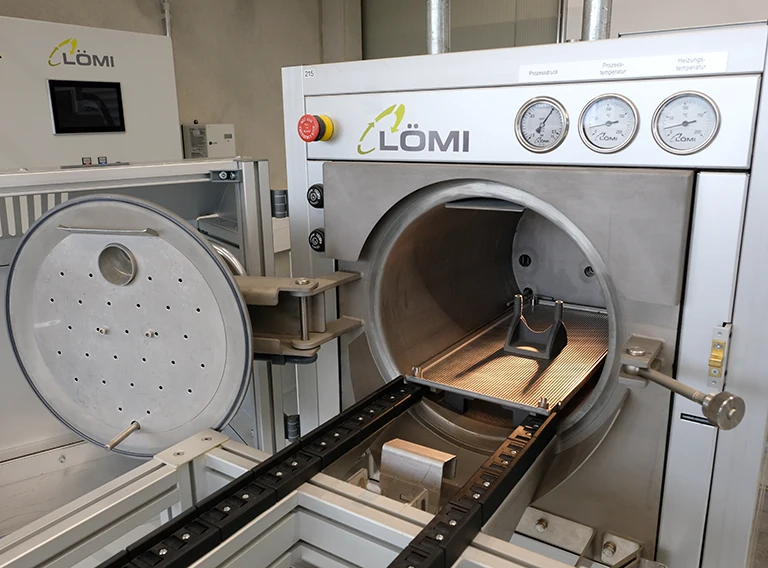
Eine Industriereinigungsmaschine mit runder, offener Tür, Innenwannen und Manometern an der Vorderseite mit der Aufschrift LÖMI wird in einer Fabrikumgebung gezeigt.

Components are manufactured from abrasive metal materials such as hard metal or tool steel to reduce post-processing steps and save material. In addition, pure copper is processed for the production of customised electronic components with a homogeneous microstructure, and bio-based or water-soluble binders are developed to reduce the CO₂ footprint of the manufacturing processes.

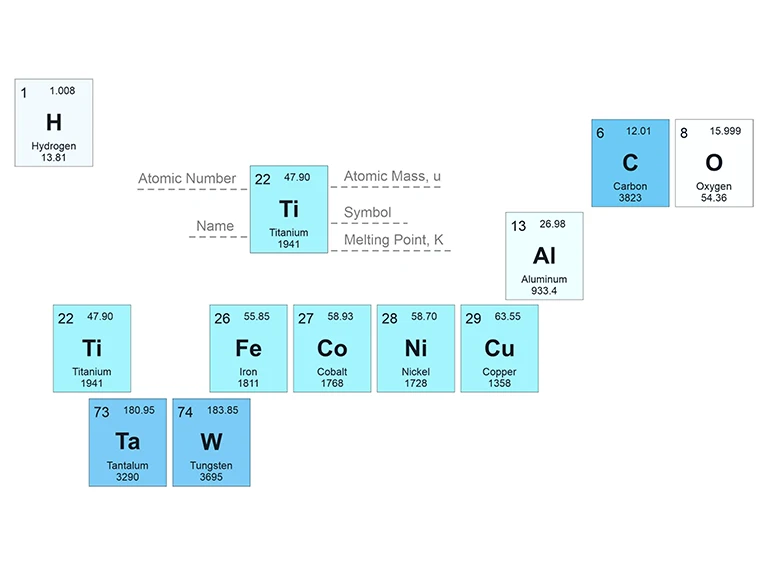
Ein vereinfachter Auszug aus dem Periodensystem, in dem Elemente wie Titan, Eisen, Kobalt, Nickel, Kupfer, Tantal und Wolfram mit ihrer Ordnungszahl, ihrem Symbol und ihrem Schmelzpunkt in blauen Kästen dargestellt sind.
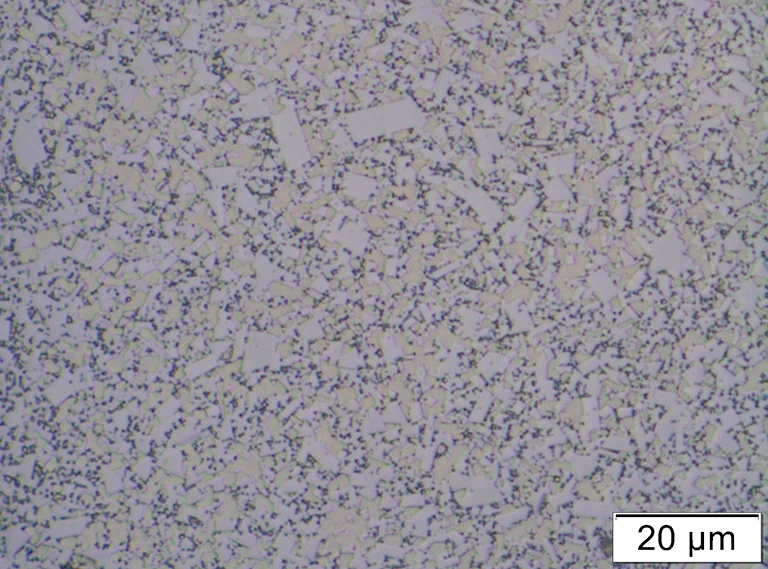
Das mikroskopische Bild zeigt eine große Anzahl unregelmäßig geformter weißer Partikel, die in einem hellen Hintergrund verteilt sind; der Maßstab in der unteren rechten Ecke zeigt 20 Mikrometer an.

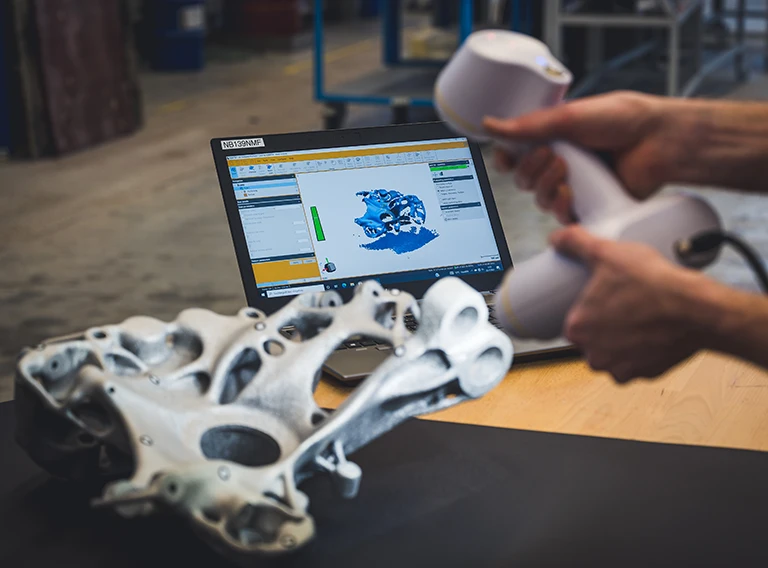
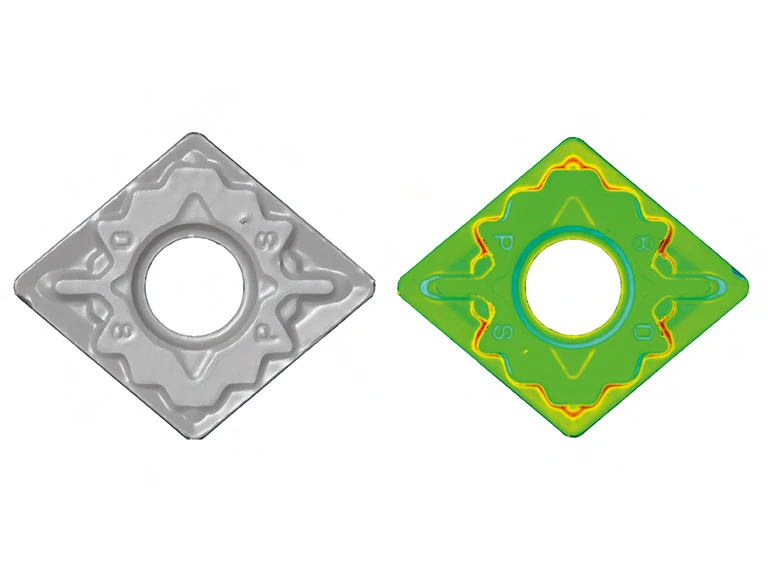
Digital quality assurance links all process steps of the manufacturing chain – from powder delivery to component post-processing – capturing the actual geometry using 3D measurement systems and comparing it to the target CAD geometry. This ensures high component quality with minimal rejection, allows for statistical process analysis, verification of interactions, and component optimisation.

The additive manufacturing chain enables the efficient testing of computationally intensive processes such as predictive AI models, thereby driving innovation across various industries and application areas.

Eine Person scannt mit einem tragbaren 3D-Scanner ein komplexes, organisch geformtes Objekt, wobei die Scanergebnisse auf einem Laptop-Bildschirm im Hintergrund zu sehen sind.
Zwei rautenförmige Metalleinsätze mit zentralen Löchern; der linke Einsatz ist in Graustufen dargestellt, während der rechte Einsatz mit einer farbcodierten Spannungs- oder Wärmekarte in Grün-, Gelb- und Rottönen überlagert ist.

Would you like to learn more about our work in the Granule-based 3D printing?

You might also be interested in these departments:
Discuss your project idea with us

Let’s shape the future of industry together!

Get in touch
Neue Materialien Fürth GmbH receives institutional funding from:
Logo des Bayerischen Staatsministeriums für Wirtschaft, Landesentwicklung und Energie, mit dem bayerischen Wappen auf der rechten Seite und blauem deutschen Text auf der linken Seite.
The image shows the European Union flag with twelve yellow stars in a circle on a blue background, next to the text EUROPEAN UNION European Regional Development Fund.