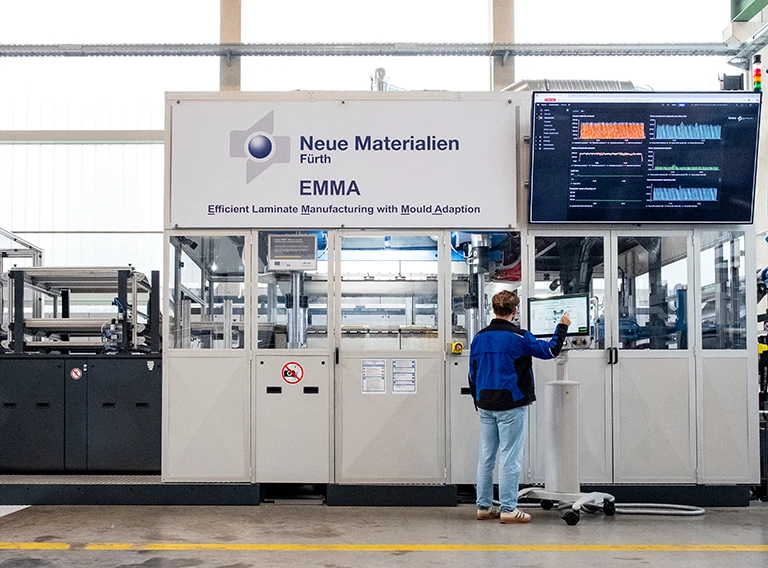
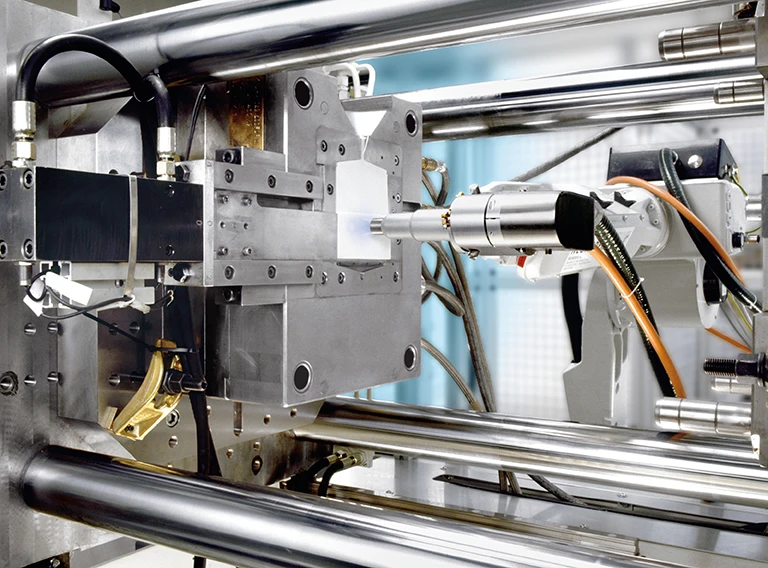
NMF relies on modern manufacturing technologies to deliver high-performance plastic and composite solutions.
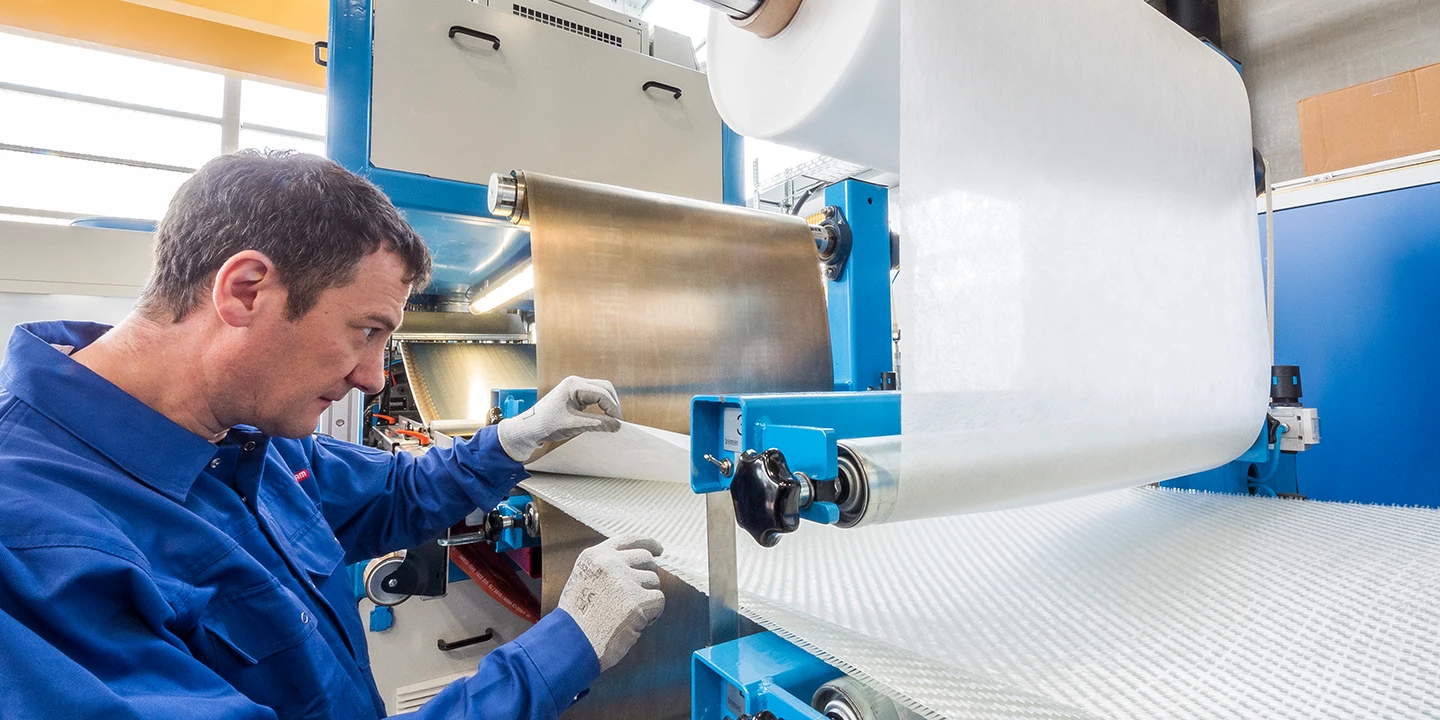
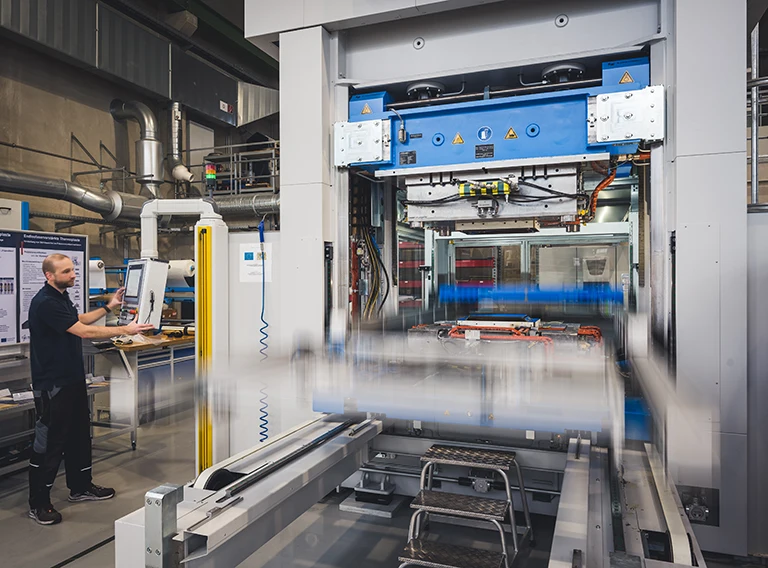
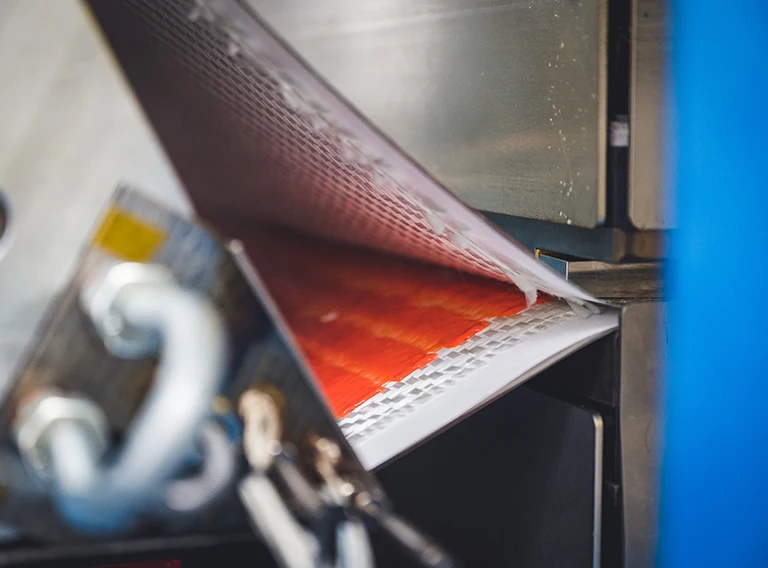
Using CCM technology, various self-reinforced, fibre-reinforced and/or sandwich structures can be produced in a single operation from layered roll stock. Hybrid technology specifically combines the advantages of plastics, metals and fibre-reinforced materials to create lightweight, functionally integrated and cost-effective components.
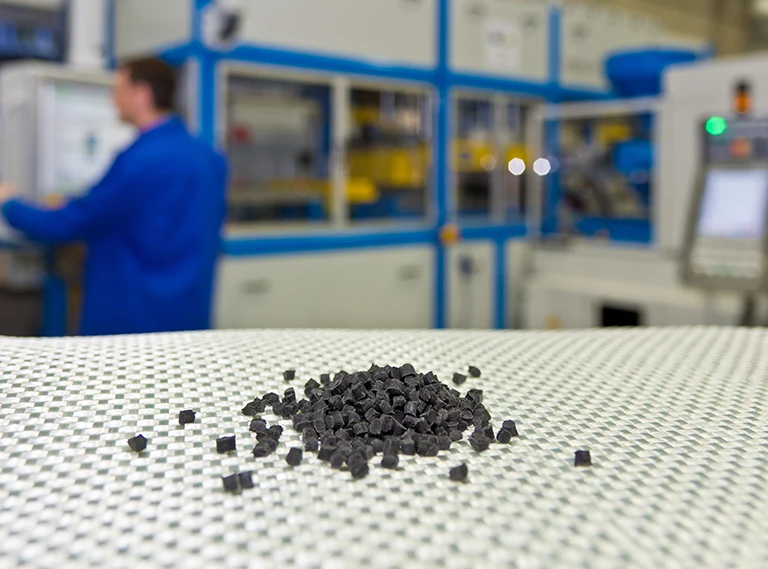
In addition, NMF is further developing additive manufacturing processes based on granules and filaments in order to process specialised technical materials into complex geometries and enable tailor-made solutions for demanding applications.
In its development activities, NMF focuses on thermoplastic polymer systems that enable cost-effective processing suitable for large-scale production. The range of polymers extends from standard to high-performance thermoplastics, which, depending on requirements, offer chemical resistance, optical quality or increased temperature and mechanical resilience. In addition, thermoplastic foams such as EPP or EPE are used as lightweight, energy-absorbing core materials for complex hybrid structures.
A wide range of fibre materials – from glass, carbon and aramid fibres to natural and high-performance polymer fibres – expands the scope of applications in lightweight construction. For hybrid structures, metals such as aluminium, steel or titanium are also integrated in order to optimise weight, strength and function in a targeted manner.
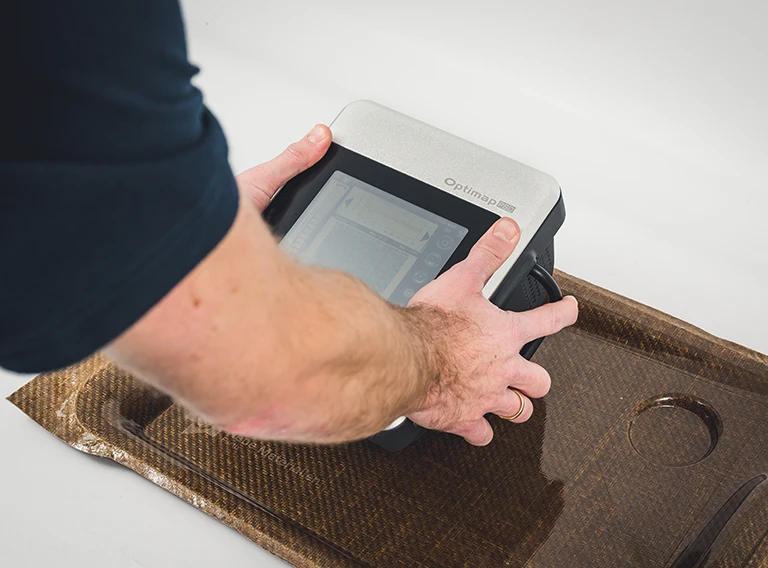
To characterize composite and hybrid materials, established mechanical testing methods such as tensile and flexural tests in accordance with DIN EN ISO, as well as analytical and optical methods, are used to determine parameters relating to strength, stiffness, density, moisture absorption and surface quality. In addition, specialised methods such as pull-off and shear tests assess the interlaminar bond strength at interfaces and joints.
Depending on the application, customer-specific test specimens and individual test setups are also developed to reliably evaluate industry-specific requirements – such as the media tightness of hybrid structures in e-mobility.
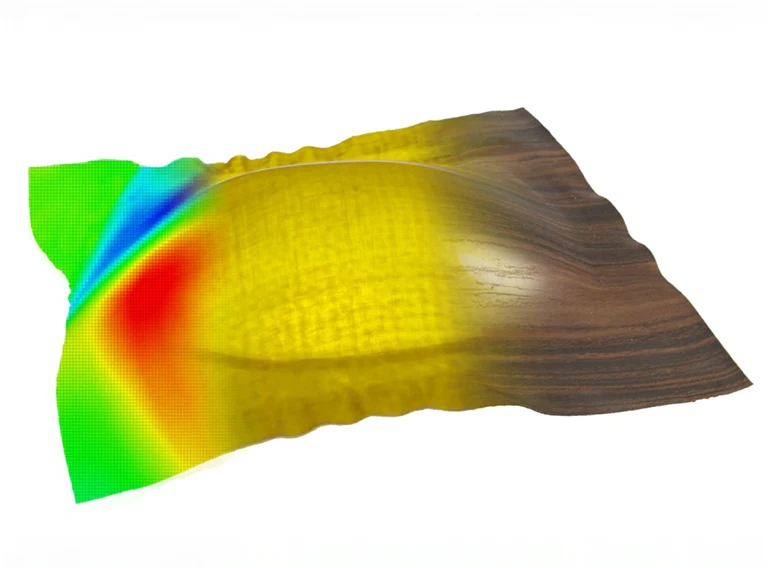
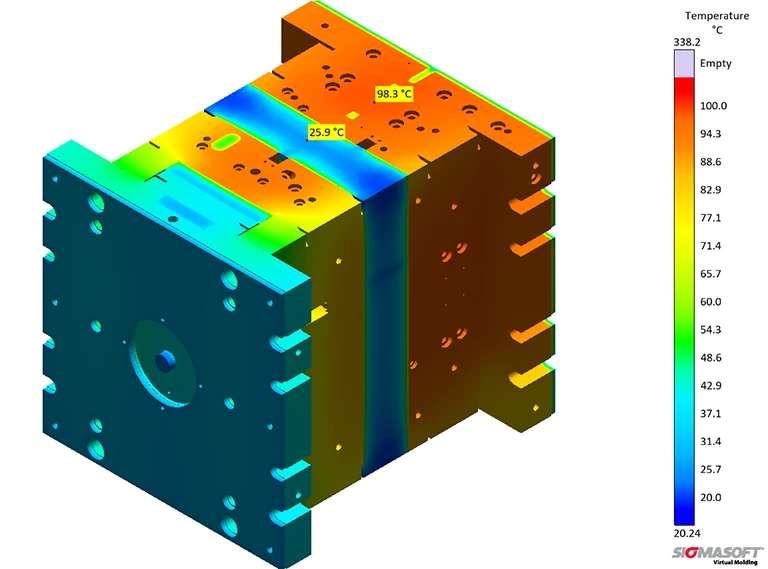
The computer-aided analysis of material systems and components takes place in three phases. In the analytical phase, initial mechanical and thermal designs are carried out on the basis of theoretical models to evaluate strength, stiffness and temperature requirements. Based on this, numerical simulation (FEM) enables a detailed analysis of stress distributions, deformation behaviour and temperature fields within the component, as well as the thermal optimisation of tools and processes.
Finally, component and process validation takes place, during which the real behaviour under load – such as fatigue strength, ageing resistance and energy efficiency – is verified. This structured approach ensures a precise, application-oriented design and the reliable qualification of modern hybrid and composite structures.